

B-Ton
10 kg exposed concrete
Item no. 1047
With B-Ton, you create wall and ceiling in a concrete look, indoors and outdoors. The dry mortar has a grain size of up to 0.70 mm. You mix the powder with water, around 450 to 500 ml per kilogram. Apply the mortar to a primed substrate with a 6 mm notched trowel, then close the ridges with the smoothing trowel. Allow approx. 1.5 kg of powder per m². After mixing, you have around 1 hour of working time. During this time, keep stirring up the stiffened mortar with the trowel. Substrate and surroundings must not fall below 5 °C during application and drying. Whether the surface turns out matt or glossy is decided by the application alone. For a matt finish, you spray the freshly smoothed surface with a water mist and then lay the plastic film on it. After peeling off the film, you wash over with the sponge float. For gloss, the film goes on dry and stays in place for as long as possible: 8 hours at the earliest, closer to 12 for strong gloss.
- Consumption: approx. 1.5 kg powder per m² with the 6 mm notched trowel
- No hazard labelling required, low-VOC, without biocides
Price after account approval
Materea supplies applicators. With a valid VAT ID your account is approved immediately and you see all prices.
Coverage: approx. 6.6 m² with one coat, depending on the substrate
Register as a businessAlready approved? Log in
B-Ton
Price after account approval
Quantity calculator
From the area to the container.
Enter the area, read off the container combination. We calculate with the value from our technical data sheet: 1.5 kg per m² and coat, one coat.
The system build-up
B-Ton is layer three. You need the rest to go with it.
A surface lasts because the layers fit together. Everything here is matched to B-Ton and comes in one order.


The build-up for this surface
Technical data & downloads
The figures for application.
All values come from our technical data sheet and the test reports.
Application
Preparation
- Mixing waterapprox. 450 to 500 ml per kg of dry mortar
- Application temperatureat least 5 °C during application and drying, substrate and surroundings
- Tools6 mm notched trowel, then smoothing trowel
Values and conditions
- Consumptionapprox. 1.5 kg per m² and coat
- UseWall and ceiling surfaces in concrete look, interior and exterior
- Storage stabilitystore dry, bagged goods
Consumption and time values depend on the substrate and room climate. The technical data sheet is binding.
Downloads
Merkblatt Nr. 210 Technical data sheet- Safety data sheetPDF
Downloads after log-in. Log in or Register as a business.
Questions
What applicators ask about this.
Frequently asked questions
Will the surface be matt or glossy?
Both are possible, depending on the application. For a matt surface, you spray the freshly smoothed surface with a water mist before the film goes on. After peeling off the film, you wash the surface over with the sponge float while it is still damp. It turns glossy if you lay in the film without spraying and peel it off as late as possible.
When do I remove the film?
After 8 hours at the earliest. From then on, the longer the film stays on, the stronger the gloss. For a matt surface, remove it earlier and wash the surface over with the sponge float while it is still damp. For a strong gloss, leave the film on for as long as possible.
How much water goes into the bag?
About 450 to 500 ml per kilogram of dry mortar. For a 10-kg bag that comes to around 4.5 to 5 litres.
Can I use B-Ton outdoors too?
Yes. We approve B-Ton for wall and ceiling surfaces, indoors and outdoors.
How far does a bag go?
A 10 kg bag is enough for around 6.5 m². Allow about 1.5 kg of powder per m² if you apply it with the 6 mm notched trowel.
You learn this technique in the D-Korativ surfaces workshop.
Finished surfaces
This is what the surface looks like
when it is finished.
Bathrooms, showers, floors and walls without a single joint, made with this material.


What the surface still needs.
Primer and sealer are part of the build-up. The times given above apply to the fully sealed surface.
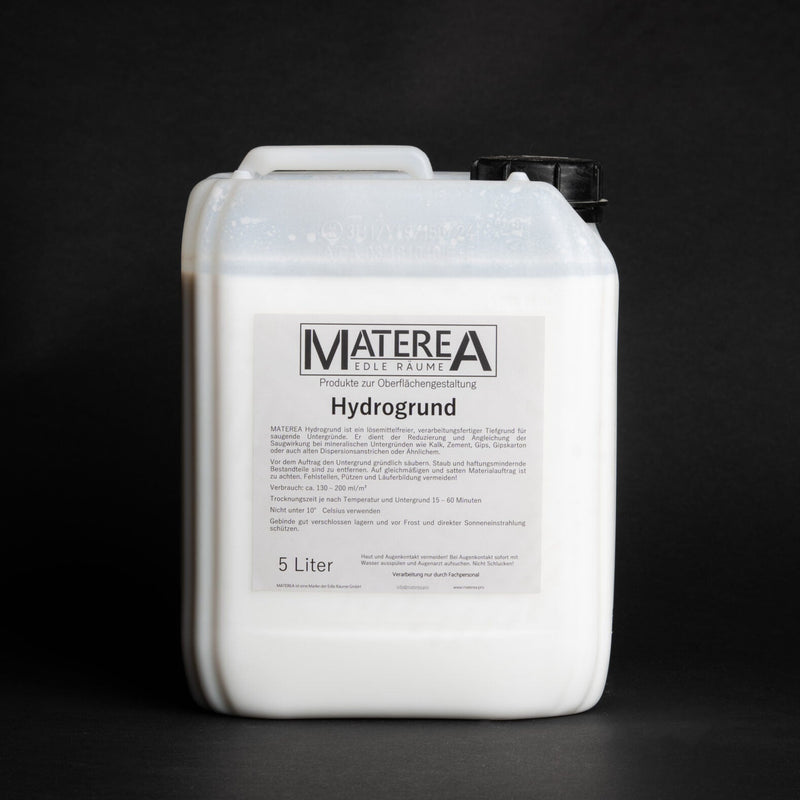 For highly absorbent substrates, before the primer
Hydrogrund
You even out highly absorbent substrates first. Prime only when the layer has dried.
Price after account approval
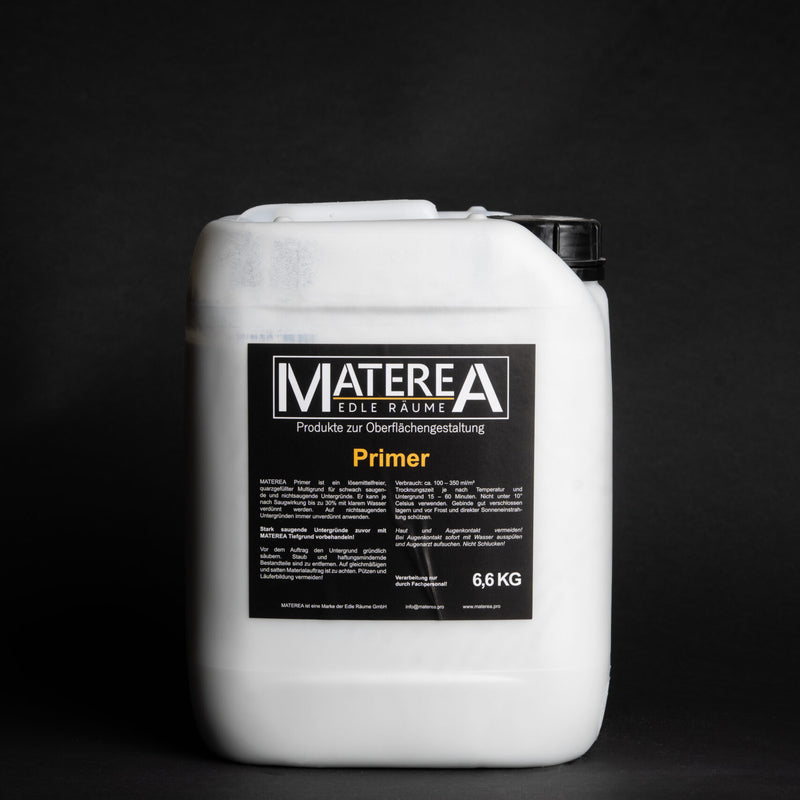 The primer before application
Primer
You prime non-absorbent and slightly absorbent substrates before the exposed concrete goes on.
Price after account approval
 The protection: impregnating soap, straight after peeling off the film
Impregnating soap
Work the soap in as soon as the film is off. It makes the surface only slightly more matt.
Price after account approval